
Urea (Granular) - Egypt CAS: 57-13-6
Ethylene oxide prices stabilized through the remainder of June 2026 after a sharp decline earlier in the month. Procurement teams should examine whether this period of stability signals a temporary market pause or a shift toward more balanced petrochemical conditions.

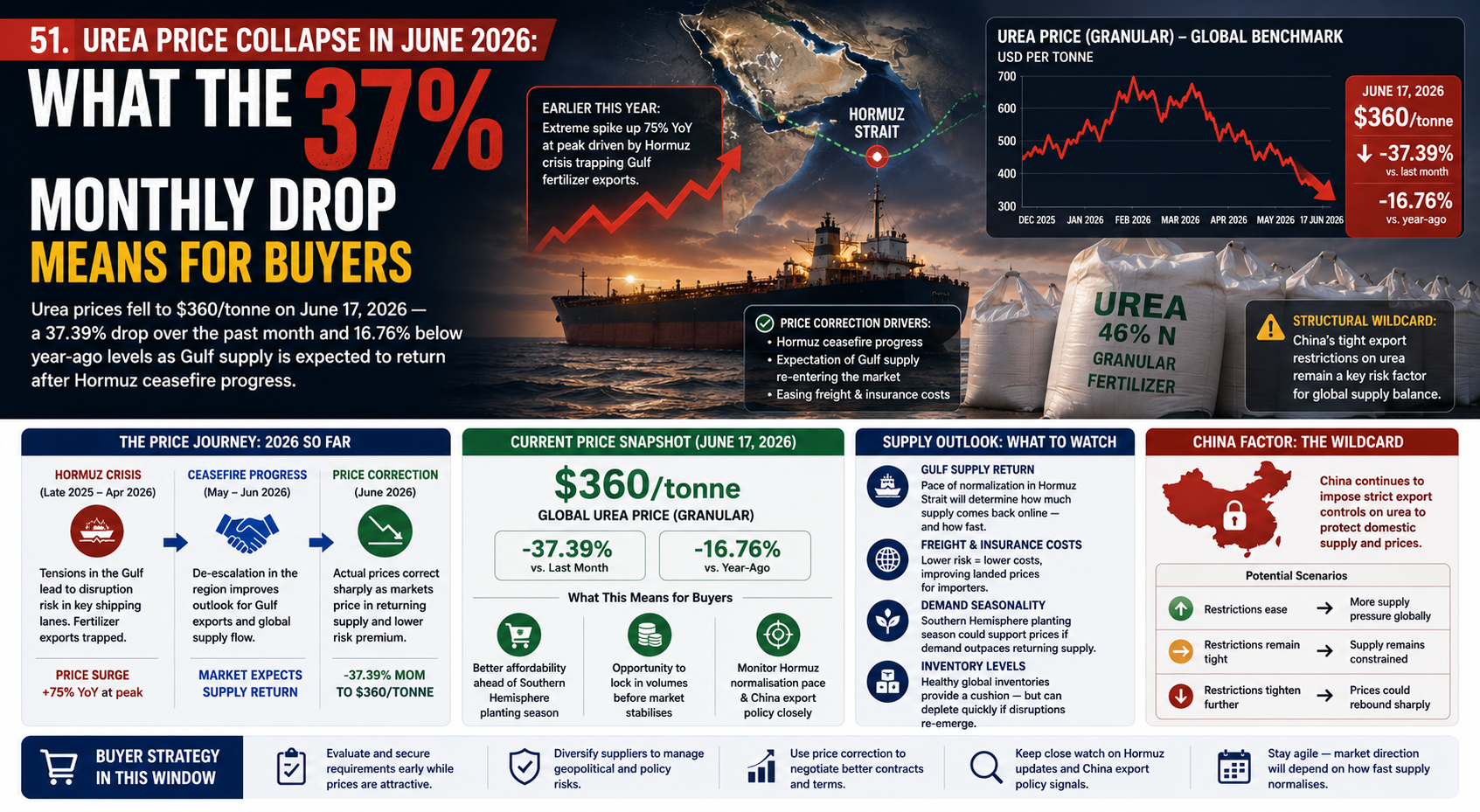
The June 2026 fertilizer intelligence report covers the volatile first half, examines Gulf supply recovery, and projects urea and DAP outlooks for the second half. It highlights key price drivers, inventory trends, and policy impacts shaping the 2026 market.

China became the world's swing supplier during the Hormuz crisis, filling global supply gaps across commodity and specialty chemicals. As Gulf exports recover in H2 2026, Beijing is strengthening domestic chemical manufacturing while international buyers shift toward balanced multi-origin sourcing strategies.

Thai sorbitol production is tightening as the annual tapioca feedstock gap reduces output, while Chinese suppliers continue operating at stable capacity with competitive export pricing. Procurement teams planning H2 2026 purchases have a valuable opportunity to lock in improved delivered costs before seasonal market dynamics shift again.
The return of Gulf polymer exports is reshaping global procurement strategies for PE, PP and PVC in Q3 2026. With Gulf, US and Chinese suppliers competing once again, buyers have a rare opportunity to compare multiple origins, negotiate better pricing and strengthen supply security.
A major wave of new HDPE capacity is entering the market as Chevron Phillips and QatarEnergy prepare to launch their Golden Triangle Polymers facility. The startup could reshape export flows, intensify competition in Asia and improve supply conditions for North American buyers.
We're committed to your privacy. Tradeasia uses the information you provide to us to contact you about our relevant content, products, and services. For more information, check out our privacy policy.