
The sorbitol procurement window during June and July 2026 presents an attractive opportunity for international buyers. Thailand's seasonal reduction in tapioca availability has lowered regional sorbitol production just as Chinese manufacturers continue supplying export markets with stable output and increasingly competitive delivered prices.
For procurement managers in the food, pharmaceutical, personal care and oral care industries, timing matters. Improving freight economics combined with reliable Chinese production create favorable purchasing conditions before fresh Thai supply returns later in the year and potentially changes regional demand patterns.
Why Thai Sorbitol Supply Is Tightening
Sorbitol production in Thailand depends heavily on tapioca starch and glucose derived from cassava. Every year the country enters a seasonal harvest gap, typically lasting from June through September.
During this period, manufacturers often experience:
Reduced availability of tapioca starch for conversion into glucose.
Higher competition among starch processors for available feedstock.
Lower operating rates at some sorbitol facilities.
Reduced export availability across Southeast Asia.
Although production does not stop completely, export volumes become less flexible. Buyers requiring consistent shipments may therefore experience longer lead times or fewer sourcing options.
China's Production Remains Stable
Chinese producers rely primarily on corn-based glucose, giving them a different supply profile than Thailand.
Throughout H1 2026, Chinese sorbitol plants maintained normal operating rates, allowing exporters to continue serving customers across Europe, the Middle East and South Asia without major supply interruptions.
Several factors currently support Chinese competitiveness:
Stable feedstock availability from the domestic corn industry.
Well-developed export logistics.
Large manufacturing capacity.
Consistent product quality suitable for regulated industries.
These strengths allow Chinese suppliers to respond quickly when Southeast Asian availability tightens.
Freight Costs Improve Delivered Economics
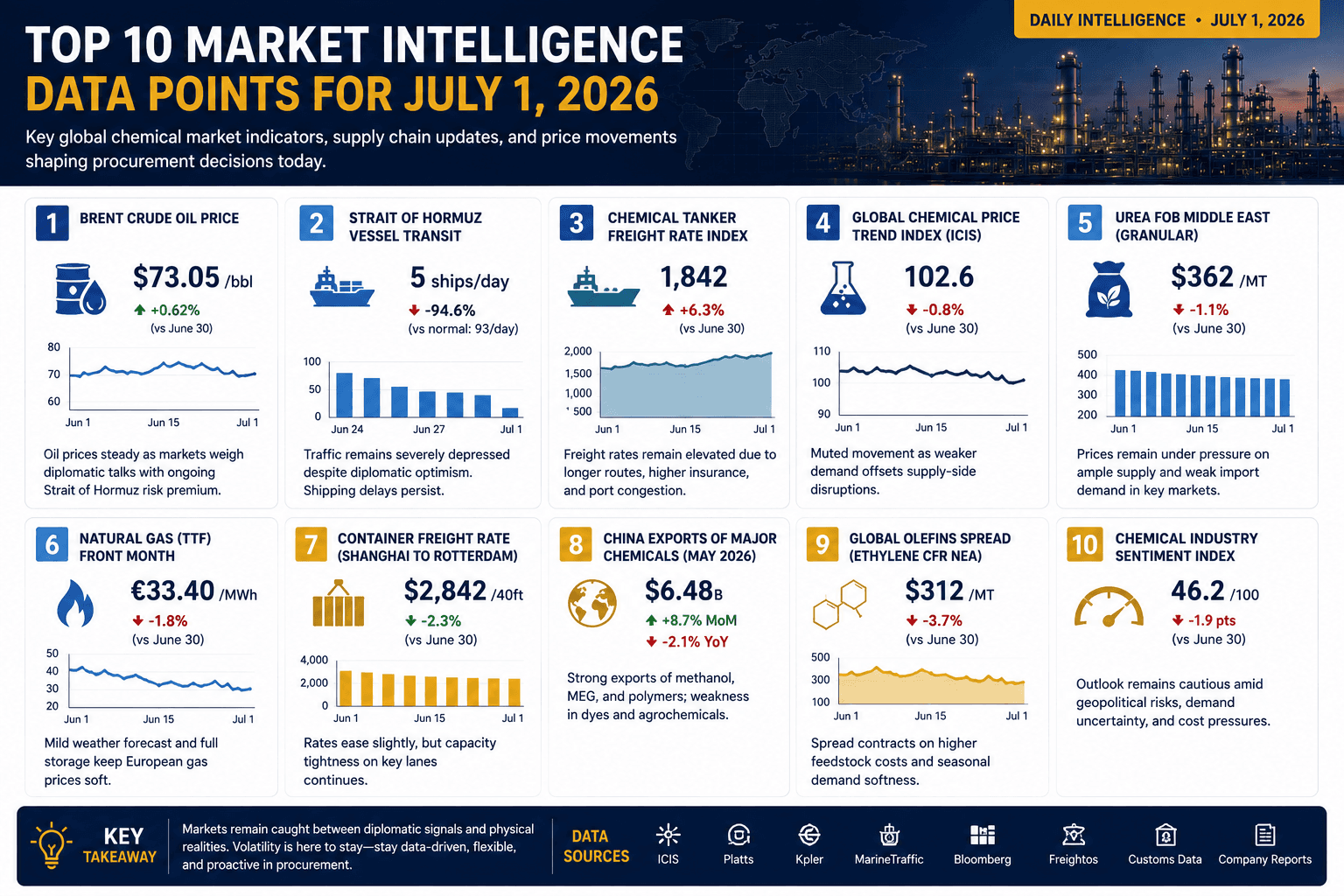
Ocean freight represented one of the largest cost pressures during the first half of 2026. As Brent crude prices softened, shipping costs gradually eased across several major trade routes.
For importers, this means delivered pricing has improved even when factory prices remain relatively stable.
Procurement teams should pay attention to the complete landed cost instead of focusing only on FOB quotations. Lower freight can significantly improve overall purchasing economics, particularly for high-volume annual contracts.
Industries Driving Sorbitol Demand
Sorbitol serves multiple industrial sectors because it functions as both a sweetener and a moisture-retaining ingredient.
Major consuming industries include:
Toothpaste manufacturers, where sorbitol helps maintain texture and prevents products from drying out.
Personal care producers, who use sorbitol in creams, lotions and cosmetic formulations.
Pharmaceutical companies, where sorbitol acts as an excipient and stabilizing ingredient.
Food manufacturers producing sugar-free products, confectionery, baked goods and beverages.
Demand from these sectors has remained relatively resilient despite changing regional supply conditions.

Why July Is an Attractive Contracting Window
The current market presents several advantages for procurement professionals planning H2 requirements.
First, Thai production remains seasonally constrained, encouraging buyers to diversify sourcing.
Second, Chinese export prices remain competitive because manufacturing capacity has not tightened significantly.
Third, improving freight rates reduce total landed costs for overseas customers.
Finally, buyers who secure contracts before October may avoid increased competition if purchasing interest shifts back toward Southeast Asia once Thailand's harvest season resumes.
Rather than waiting for uncertain market movements, many importers can reduce procurement risk by securing volumes while logistics remain favorable.
Regional Trade Outlook
Different importing regions may experience varying purchasing opportunities.
European buyers benefit from lower shipping costs compared with earlier in the year, helping improve delivered competitiveness.
Middle Eastern importers continue seeking dependable suppliers capable of meeting growing demand from food processing and personal care manufacturers.
South Asian markets remain active because expanding consumer industries continue increasing sorbitol consumption across pharmaceutical and food applications.
For all three regions, Chinese exporters currently offer an attractive balance between availability, pricing and delivery reliability.
Factors That Could Change Prices Later in 2026
Market conditions rarely remain static.
Several developments could influence sorbitol pricing during the second half of the year:
A stronger recovery in Thai production after October.
Unexpected changes in Chinese corn prices.
Higher international freight rates if energy markets strengthen again.
Increased buying activity as manufacturers replenish inventories.
Currency movements affecting export competitiveness.
Procurement teams should monitor these indicators rather than relying on a single pricing trend.
Supplier Selection Beyond Price
Choosing a supplier solely on price can increase operational risk.
Professional buyers should also evaluate:
Manufacturing consistency and production capacity.
Export documentation quality.
Regulatory compliance.
Packaging options suitable for long-distance shipping.
Historical shipment reliability.
Technical support for industrial applications.
A dependable supplier often delivers greater long-term value than the lowest quotation.
Procurement Strategies for H2 2026
Current conditions favor proactive purchasing rather than delayed spot buying.
Many organizations may benefit from:
Locking in contract volumes during the June and July purchasing period.
Diversifying sourcing between multiple qualified suppliers.
Negotiating freight-inclusive quotations to capture current logistics savings.
Confirming production schedules well before peak seasonal demand.
Reviewing inventory levels to avoid emergency purchases later in the year.
These strategies improve budgeting certainty while reducing exposure to supply disruptions.
What Buyers Should Do Now
The combination of Thailand's seasonal feedstock shortage, steady Chinese production and improving freight economics has created one of the more favorable sorbitol purchasing windows of 2026.
Market conditions may evolve once Thai harvest activity resumes and regional buying patterns shift during the fourth quarter. Procurement teams that finalize sourcing during the current window can strengthen supply security while benefiting from competitive delivered pricing.
Ready to source sorbitol from verified global suppliers? Explore competitive offers on our platform today.
Corn Gluten Feed CAS: 66071-96-3