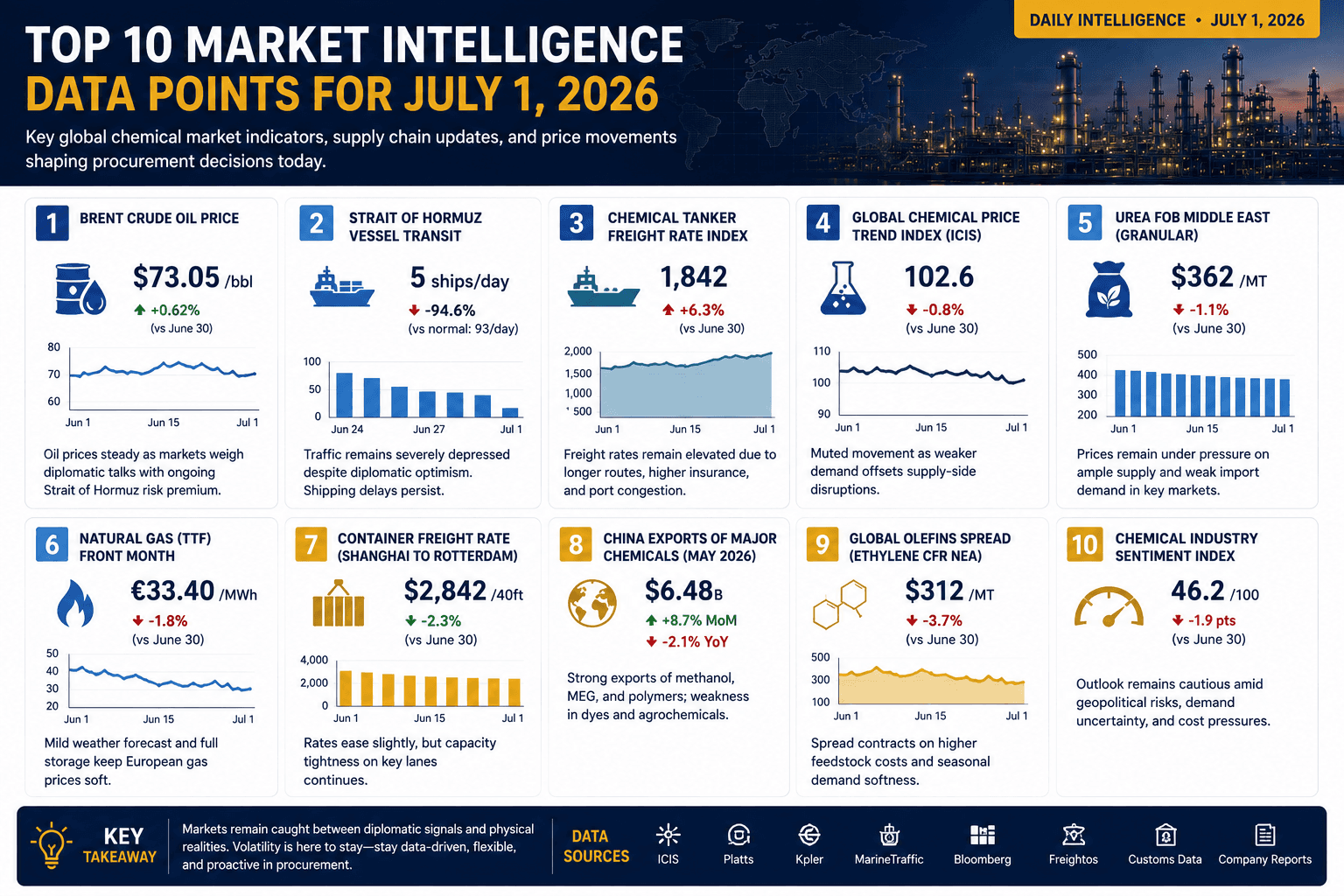
Asian naphtha prices dropped sharply during early June 2026, yet buyers across the region showed little urgency to increase purchases. While lower feedstock costs typically encourage restocking, the current market faces a different challenge. Weak demand for downstream plastics continues to limit confidence.
The naphtha market now reflects a broader petrochemical slowdown. Buyers recognize attractive pricing opportunities, but many remain reluctant to build inventory while polyethylene and PVC consumption remains subdued. For traders, producers and procurement teams, the key question is no longer whether prices have fallen enough. The real question is whether end-user demand can recover fast enough to justify additional purchases.
Why Falling Naphtha Prices Have Not Triggered Strong Buying
Historically, sharp corrections in naphtha prices often encouraged traders and manufacturers to replenish inventories. The current environment looks different because downstream demand remains weak across several major sectors.
Many buyers see lower prices as an opportunity, but they also see significant risks. Purchasing aggressively today could leave inventories exposed if derivative markets weaken further.
Several factors explain the cautious approach:
PE demand remains soft in many Asian markets as packaging and industrial consumption grows more slowly than expected.
PVC consumption continues to face pressure from weak construction activity and slower project execution.
Manufacturers remain focused on inventory management rather than production expansion.
Economic uncertainty encourages companies to preserve cash rather than increase raw material purchases.
As a result, lower naphtha values alone have not created a broad recovery in purchasing activity.
The PE and PVC Demand Problem
The biggest obstacle facing the naphtha market sits downstream. Demand for polyethylene and PVC remains below expectations despite lower feedstock costs.
Polyethylene markets continue to struggle with oversupply in several regions. New production capacity has entered global markets while consumption growth remains moderate. Buyers therefore maintain leverage during negotiations and often purchase only immediate requirements.
PVC faces a similar challenge. Construction activity remains slower than many producers anticipated entering 2026. Housing projects, infrastructure investment and industrial development continue to recover unevenly across Asia.
For naphtha consumers, this creates a difficult situation. Lower feedstock costs help, but weak derivative demand prevents significant margin expansion.
Margin Pressure on Asian Naphtha Crackers
The current market creates particular difficulties for steam crackers that rely heavily on naphtha as their primary feedstock.
Facilities with access to alternative feedstocks such as ethane or propane enjoy greater flexibility. They can adjust feedstock economics based on market conditions and often maintain stronger competitiveness.
Naphtha-dependent operators face a tougher environment because:
Feedstock costs remain elevated compared with historical pre-2026 averages.
Derivative selling prices have not increased enough to offset production costs.
Regional competition continues to intensify.
Export markets remain crowded with material from multiple producing regions.
This combination keeps margins under pressure even after recent declines in feedstock pricing.
Feedstock Flexibility Is Becoming a Competitive Advantage
One of the clearest themes emerging in 2026 involves feedstock flexibility. Producers that can switch between naphtha, propane and ethane possess an important advantage during periods of market volatility.
Flexible operators can respond quickly when one feedstock becomes more economical than another. This helps protect margins and supports more competitive product pricing.
Naphtha-only operators lack this flexibility. Their profitability depends more heavily on the relationship between feedstock costs and downstream polymer demand.
As market uncertainty continues, procurement teams increasingly monitor feedstock exposure when evaluating supplier competitiveness.
How Asian Trade Flows Are Responding
The current market has started to influence regional trade patterns. Lower naphtha prices encourage some buying interest, but the response remains selective.
Importers generally focus on short-term requirements rather than long-term commitments. Many companies prefer maintaining purchasing flexibility until clearer demand signals emerge.
Several trade characteristics define the market today:
Spot transactions attract greater attention than long-term volume commitments.
Buyers negotiate aggressively due to abundant product availability.
Inventory management remains a top priority.
Regional arbitrage opportunities appear frequently but often close quickly.
These conditions favor experienced traders who can react rapidly to changing market dynamics.
What Procurement Teams Should Monitor
Procurement professionals should avoid focusing exclusively on feedstock prices. The broader supply chain contains several indicators that may prove more important than naphtha itself.
Key metrics worth monitoring include:
Polyethylene order volumes from packaging and industrial customers.
PVC consumption trends in construction markets.
Cracker operating rates across major Asian production hubs.
Inventory levels held by traders and converters.
Shipping costs and logistics availability.
Feedstock spreads between naphtha, propane and ethane.
A recovery in these indicators would likely provide stronger support for naphtha demand than additional feedstock price declines.
Supply Risks Have Not Completely Disappeared
Although prices have fallen, supply-side risks continue to influence buyer behavior.
Geopolitical uncertainty remains an important concern for petrochemical markets. Energy flows, shipping routes and feedstock availability can still change quickly if regional tensions intensify.
Many buyers therefore face a balancing act. They want to benefit from lower prices while avoiding excessive exposure to future disruptions.
This cautious strategy helps explain why demand has improved only modestly despite recent price corrections.
The Relationship Between Naphtha and Polymer Markets
Naphtha rarely moves in isolation. Its market direction depends heavily on the health of derivative sectors.
When PE, PP and PVC demand expands, naphtha consumption usually follows. Crackers increase operating rates and feedstock requirements rise accordingly.
The opposite situation exists today. Downstream demand weakness limits production incentives, reducing urgency for additional feedstock purchases.
For traders, understanding this relationship remains essential. Monitoring polymer fundamentals often provides better market insight than watching feedstock prices alone.
Market Outlook for the Second Half of 2026
The second half of 2026 could bring gradual improvement, but the recovery path remains uncertain.
Much depends on whether downstream industries begin increasing consumption. Packaging demand, construction activity and manufacturing output will likely determine the pace of any market rebound.
Several scenarios remain possible:
A modest recovery in PE and PVC demand could support stronger naphtha buying and improve cracker margins.
Continued weak consumption could keep feedstock demand subdued despite attractive pricing.
Additional production capacity entering global markets could prolong oversupply conditions.
Improved economic confidence could encourage inventory rebuilding and stronger purchasing activity.
Current evidence suggests the market will remain cautious until downstream demand shows sustained improvement rather than temporary restocking activity.
The Bottom Line for Petrochemical Buyers
The Asian naphtha market currently presents a rare combination of lower prices and cautious sentiment. Buyers have access to more attractive feedstock costs, yet weak PE and PVC demand continues to limit confidence throughout the value chain.
For procurement teams, the opportunity lies in disciplined purchasing rather than aggressive inventory accumulation. Monitoring downstream demand indicators, cracker economics and feedstock flexibility will remain more important than focusing solely on headline price movements.
The next phase of market direction will likely depend on end-user consumption rather than feedstock supply. Until polyethylene and PVC markets show stronger recovery signals, many buyers will continue prioritizing flexibility and risk management over volume expansion.
Ready to source naphtha from verified global suppliers? Explore competitive offers on our platform today.
Low Density Polyethylene (LDPE) CAS: 9002-88-4