
Methanol CAS: 67-56-1
Methanol CAS: 67-56-1
The interim June 17 agreement to reopen Hormuz has collapsed

A definitive analytical article for Day 125 of the Hormuz crisis: what has permanently changed about the chemical procurement profession itself, not just the market conditions it manages.

The International Maritime Organization has confirmed 49 security incidents across Hormuz and the Persian Gulf as of June 30, creating the most comprehensive official risk dataset of the 2026 shipping crisis. For chemical tanker operators and cargo buyers, this record now defines insurance underwriting and shipping risk calculations for H2 2026.

This weekly brief highlights Gulf logistics recovery, structural helium constraints, rising GLP‑1 solvent demand, shifting polymer duties in India, and imminent EU regulatory updates. Procurement teams must adjust sourcing strategies to navigate these evolving risks and opportunities.

Venator Materials’ looming debt restructuring could reduce European TiO2 output, tightening supply for coatings, plastics, and paper. With Gulf feedstock constraints and high shipping costs, the industry faces higher lead times and costs. Buyers must now assess supplier stability as a core procurement factor.
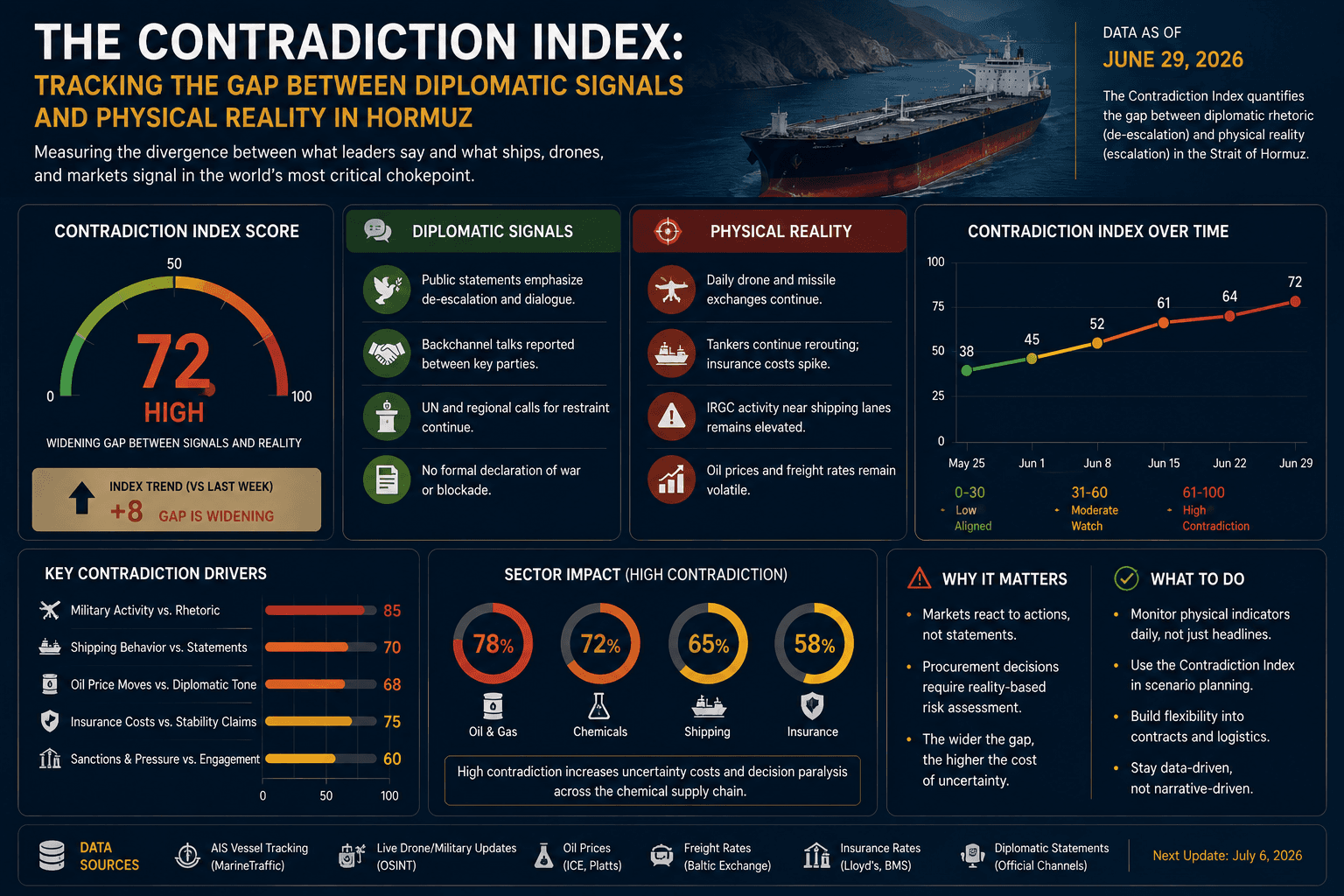
July 1 reveals the biggest contradiction of the Hormuz crisis so far: diplomacy suggests progress, but physical shipping data shows continued disruption. For chemical procurement professionals, understanding the gap between political signals and operational reality has become essential for making correct supply chain decisions.
We're committed to your privacy. Tradeasia uses the information you provide to us to contact you about our relevant content, products, and services. For more information, check out our privacy policy.