Linear Alkylbenzene Sulfonic Acid (LABSA): The Backbone of the Detergent Industry
Overview
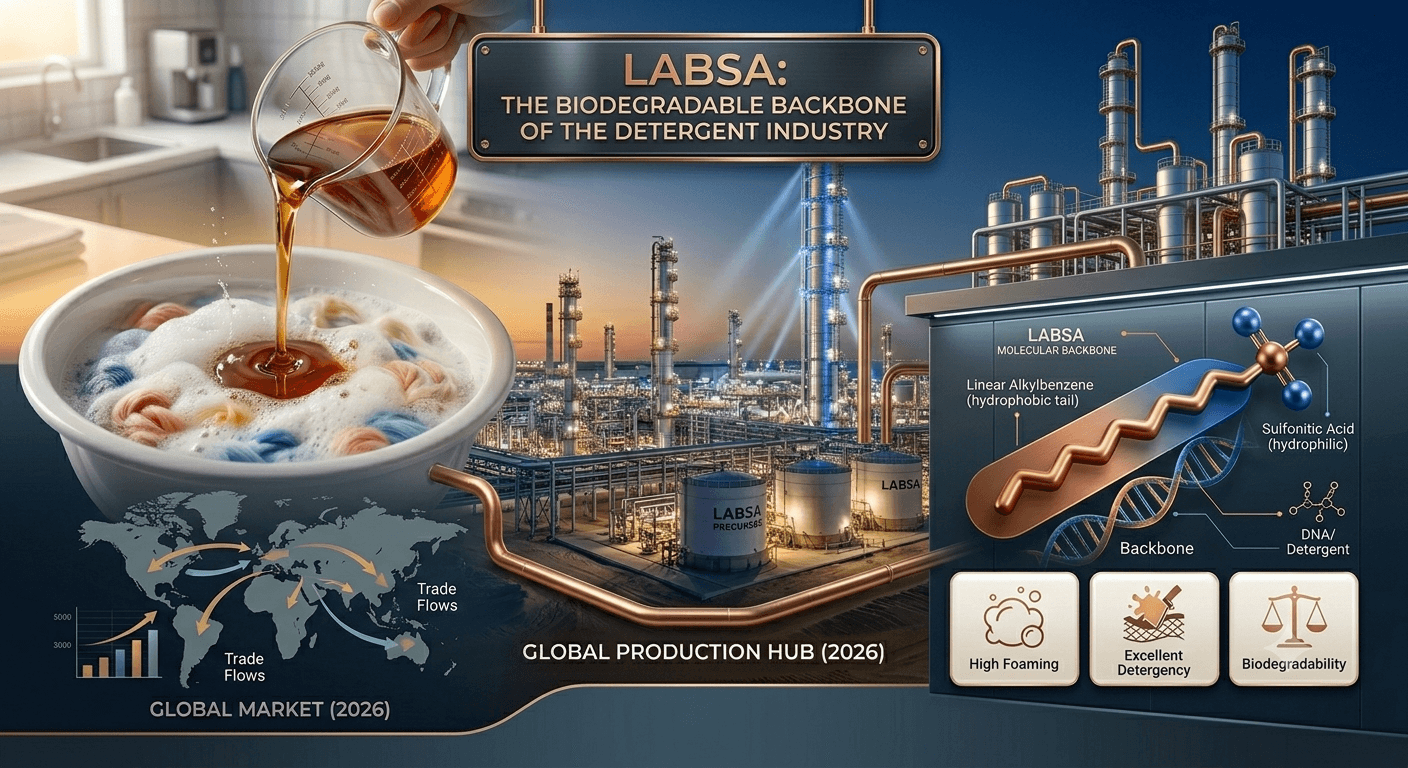
Linear Alkylbenzene Sulfonic Acid (LABSA 90%) is one of the world's most widely used surfactant raw materials and serves as the foundation of the detergent industry. It is the primary feedstock for manufacturing anionic surfactants used in household and industrial cleaning products. Due to its excellent cleaning efficiency, biodegradability, and cost-effectiveness, LABSA remains a critical ingredient in modern detergent formulations.

Why LABSA Matters
LABSA is extensively used in the production of:
Laundry powders and detergent cakes
Liquid laundry detergents
Dishwashing liquids
Industrial and institutional cleaners
Hard-surface cleaning products
Textile and leather processing chemicals
Because detergents are essential consumer goods, LABSA demand remains relatively stable even during economic downturns, making it a strategically important chemical in the global surfactant market.
Manufacturing Process
LABSA is produced through the sulfonation of Linear Alkylbenzene (LAB).
The value chain follows:
Benzene + Kerosene → Linear Alkylbenzene (LAB) → Sulfonation → LABSA
Key feedstocks include:
Benzene from petrochemical refining
Kerosene-derived paraffins
Sulfur-based sulfonating agents
As a result, fluctuations in crude oil, kerosene, benzene, and sulfur markets directly impact LABSA production costs.
Sodium Bicarbonate (Technical) - India CAS: 144-55-8
Impact of the Hormuz Supply Disruption
The 2026 disruption in Middle Eastern energy and petrochemical supply chains created significant challenges for LABSA producers.
Key effects included:
Reduced availability of kerosene-derived feedstocks.
Higher benzene prices due to supply uncertainty.
Increased freight and insurance costs.
Rising production costs for LAB manufacturers.
Margin pressure across the detergent value chain.
Since the Middle East is a major supplier of refinery products and petrochemical feedstocks, disruptions in the region quickly translated into higher raw material costs for LAB and subsequently LABSA producers worldwide.

India's Position in the Global LABSA Market
India is one of the largest producers and exporters of LABSA, supported by a strong refining and chemical manufacturing base.
Major industry participants include:
Indian Oil Corporation
Tata Chemicals
Hindustan Unilever
India's detergent industry benefits from:
Large domestic demand
Integrated petrochemical infrastructure
Competitive manufacturing costs
Strong export networks
Access to major Asian and African markets
India–US Trade Advantage
The India–US trade arrangement featuring a 10% tariff environment has improved the competitiveness of Indian chemical exports, including LABSA.
Potential benefits include:
Better pricing competitiveness versus some international suppliers
Increased export opportunities to US detergent manufacturers
Improved margins for Indian exporters
Greater participation in global cleaning-product supply chains
As multinational consumer goods companies diversify sourcing strategies, India is positioned to capture additional export demand.

Role in the Detergent Industry
LABSA remains the dominant anionic surfactant raw material because it offers:
Strong grease-removal performance
Excellent foaming characteristics
Cost-effective formulation economics
Good biodegradability profile
Compatibility with various detergent additives
These characteristics make LABSA indispensable for both premium and economy detergent products.
Digital Trade and B2B Marketplaces
LABSA 90% is actively traded through global B2B chemical platforms where buyers can source products based on:
Purity specifications
Packaging formats
Export certifications
Delivery terms
Volume requirements
The growth of digital chemical marketplaces has increased transparency and improved access for detergent manufacturers worldwide.
Market Outlook
Global demand for detergents, household cleaners, and industrial sanitation products continues to support steady LABSA consumption. While feedstock volatility linked to benzene and kerosene markets may create short-term pricing fluctuations, long-term demand remains positive due to population growth, urbanization, rising hygiene standards, and expanding detergent consumption in emerging economies.
Key Takeaways
LABSA 90% is the primary raw material for anionic detergent surfactants.
It is produced from LAB, which is derived from benzene and kerosene.
The 2026 Hormuz disruption increased feedstock and logistics costs.
India is a major global producer and exporter of LABSA.
Improved India–US trade conditions enhance export competitiveness.
Growing detergent and cleaning-product demand supports long-term market growth.