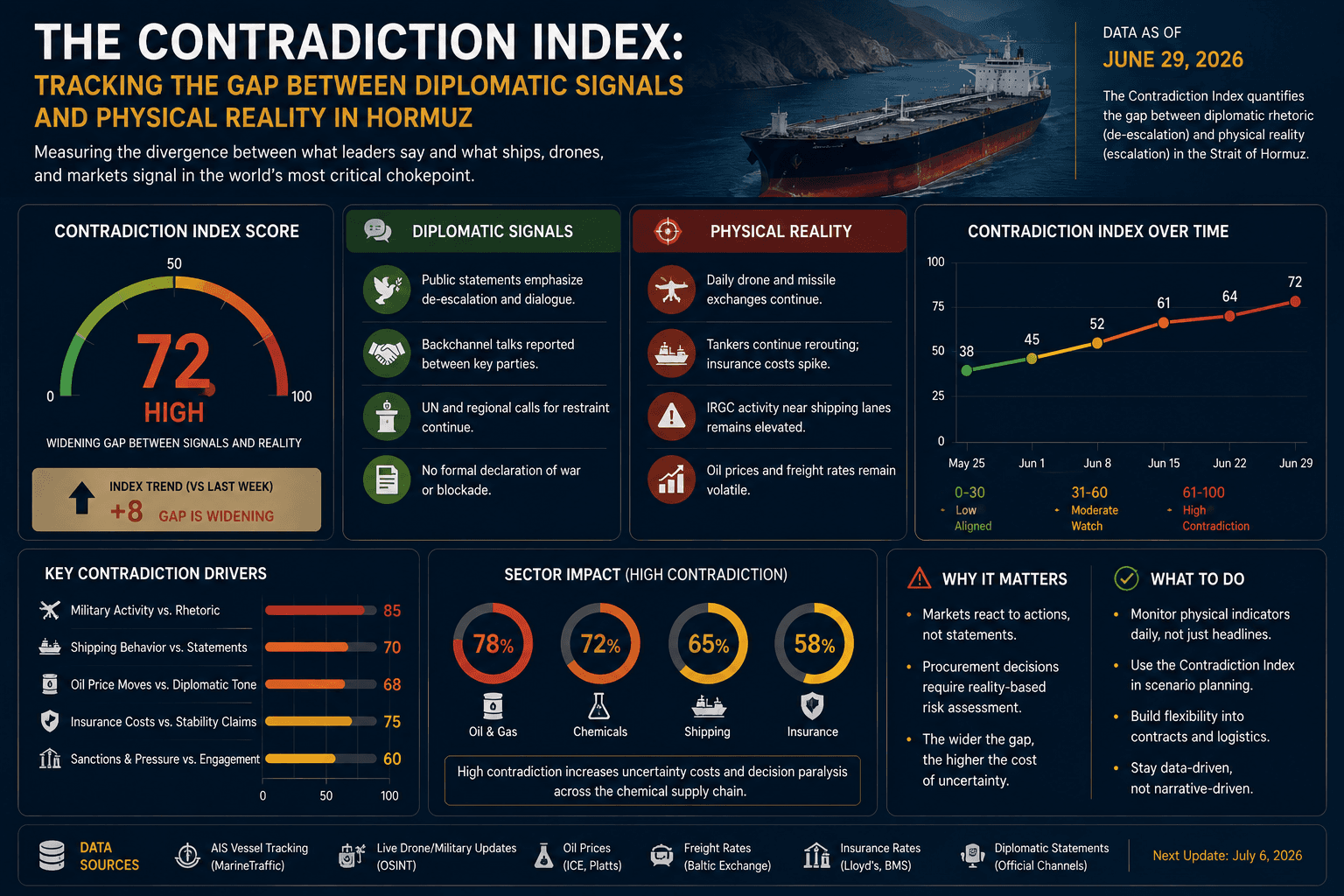

As the industry heads into a holiday-adjacent short working week, procurement teams have limited time to respond to several important developments shaping the specialty chemical market. While no single event is expected to transform global supply overnight, together these developments highlight areas where proactive planning can reduce procurement risk and improve supply continuity during the second half of 2026.
This week's intelligence brief focuses on five developments that deserve immediate attention from chemical manufacturers, distributors, and sourcing professionals.

1. Strait of Hormuz Convoys Restore Confidence But Risk Assessment Continues
Commercial vessel convoys through the Strait of Hormuz are gradually restoring confidence in regional shipping operations. Improved maritime security may help stabilize chemical exports from Gulf producers, but procurement teams should not assume that logistics risks have disappeared.
Key actions include:
Review current shipping schedules.
Confirm cargo insurance coverage with providers.
Monitor freight costs and transit times.
Maintain contingency logistics plans.
Although shipping conditions are improving, geopolitical developments can still influence transportation costs and delivery reliability.
2. Helium Supply Requires Long-Term Planning
The prolonged reduction in helium production capacity has reinforced the importance of treating helium as a strategic raw material rather than a routine industrial gas.
Industries particularly affected include:
Semiconductor manufacturing
Pharmaceutical production
Healthcare
Scientific research
Electronics manufacturing
Procurement priorities should include:
Evaluating strategic inventory levels
Exploring helium recovery technologies
Diversifying supplier relationships
Negotiating long-term supply agreements where appropriate
Early planning can improve supply resilience during an extended period of market tightness.
3. LABSA Market Competition Is Changing
As feedstock availability improves, competition within the LABSA market is expected to increase.
For detergent and cleaning product manufacturers, this creates an opportunity to review sourcing strategies before market conditions stabilize.
Recommended actions include:
Compare quotations from multiple suppliers.
Review long-term pricing structures.
Diversify regional sourcing.
Monitor feedstock market developments.
A competitive supplier base can improve both pricing flexibility and long-term supply security.
Linear Alkylbenzene Sulfonic Acid (90%) - India CAS: 27176-87-0
4. Biosurfactant Qualification Remains a Strategic Opportunity
Many manufacturers accelerated biosurfactant evaluations during periods of elevated conventional surfactant prices.
Even as market conditions evolve, completing technical qualification programs remains valuable because it can provide:
Greater formulation flexibility
Stronger sustainability positioning
Alternative sourcing options
Enhanced product innovation opportunities
Organizations that complete evaluations now will be better prepared to respond to future market changes.
5. Regulatory Planning Remains Essential
Chemical companies introducing new substances into the U.S. market should continue monitoring regulatory review timelines and maintaining close communication with compliance teams.
Important priorities include:
Reviewing active regulatory submissions
Confirming application status
Maintaining complete technical documentation
Building flexibility into commercialization schedules
Strong regulatory planning can help reduce project uncertainty during periods of administrative change.
Procurement Priorities for the Week
This week's developments reinforce several best practices that apply across the specialty chemical industry.
Procurement teams should focus on:
Strengthening supplier diversification
Reviewing inventory strategies
Monitoring logistics performance
Updating risk management plans
Improving communication with strategic suppliers
Tracking regulatory developments
Aligning purchasing decisions with long-term business objectives
Taking action during quieter market periods often provides greater flexibility before demand increases later in the quarter.
Market Outlook
The specialty chemical market continues to balance supply recovery, regulatory developments, sustainability initiatives, and evolving customer demand.
Rather than reacting to individual headlines, organizations should evaluate broader market trends and maintain flexible procurement strategies capable of adapting to changing conditions.
Companies that combine supply diversification, effective inventory planning, strong supplier relationships, and proactive regulatory management will be better positioned for the remainder of 2026.
Final Thoughts
This week's market developments emphasize the importance of proactive procurement rather than reactive purchasing. Whether managing raw material availability, evaluating alternative technologies, strengthening regulatory planning, or reviewing supplier relationships, organizations that act early are more likely to maintain reliable operations in an evolving specialty chemical market.