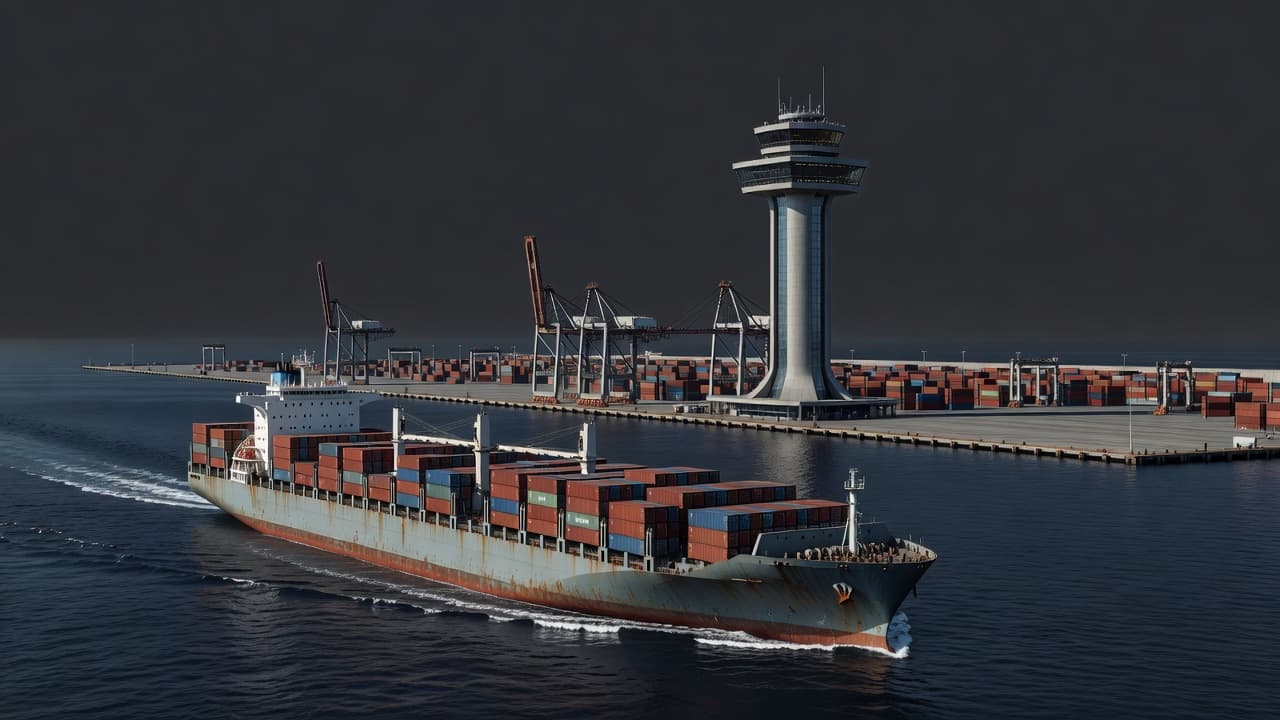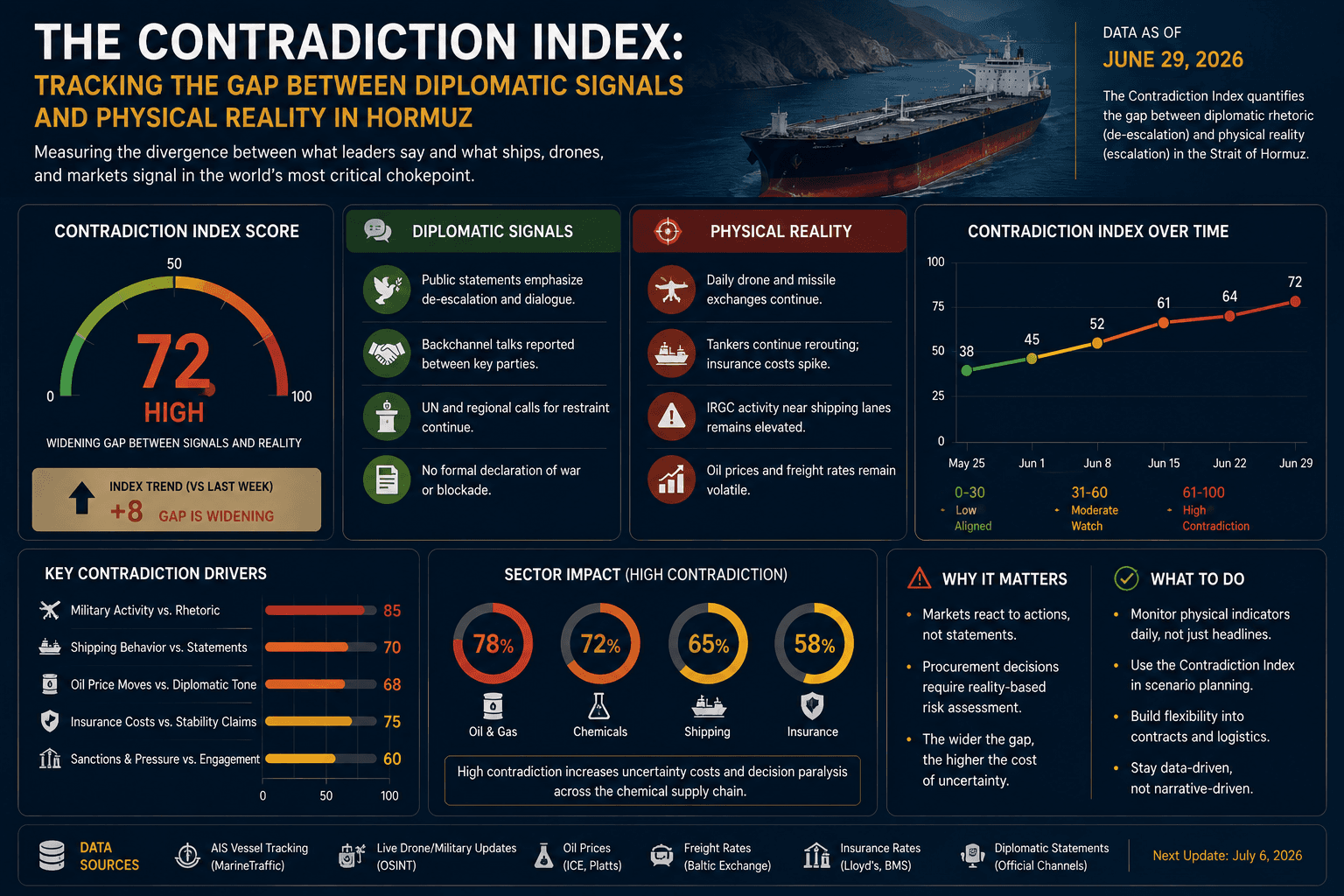

The opening of H2 2026 finds global container shipping operating under a clear and remarkably consistent strategy. Despite improving diplomatic conditions and the gradual recovery of Gulf export terminals, the world's nine largest container carriers continue treating Cape of Good Hope routing as their standard operating model for Gulf-linked services.
For chemical buyers, this is more than a shipping update. It is one of the most important commercial indicators for procurement planning during the third quarter. Carrier routing decisions influence freight costs, insurance premiums, transit times and inventory strategies throughout global chemical supply chains.
Carrier Strategy Reflects Operational Reality
Shipping companies evaluate risk differently from financial markets.
While commodity prices may respond quickly to diplomatic announcements, container carriers base operational decisions on long-term schedule reliability, crew safety, insurance requirements and network stability.
As of 1 July 2026, none of the nine largest global container carriers has publicly indicated plans to resume routine Hormuz transits during Q3.
Instead, carriers continue maintaining Cape of Good Hope services while monitoring developments across the Gulf.
This consistency provides buyers with a reliable basis for logistics planning even if geopolitical conditions continue evolving.
Why Cape Routing Remains the Industry Standard
Routing around the Cape of Good Hope increases voyage distance, but it also provides greater operational certainty.
For shipping companies managing global service networks, predictable schedules often outweigh the shorter distance offered by the Strait of Hormuz during periods of elevated geopolitical risk.
Several factors continue supporting Cape routing:
More consistent voyage planning.
Reduced exposure to regional security uncertainty.
Improved schedule reliability across interconnected shipping networks.
Better visibility for customers planning inventory and production.
Although transit times remain longer, predictable operations generally provide greater value than uncertain schedules.
Understanding the Difference Between "Rerouting" and "Suspended"
One of the most important distinctions for chemical shippers is the difference between carriers that are rerouting services and those that have suspended operations.
These terms describe very different operational realities.
Rerouting means:
Cargo continues moving.
Ships avoid the Strait of Hormuz by sailing around the Cape of Good Hope.
Services remain active despite longer transit times.
Customers can continue booking cargo with revised schedules.
Suspended means:
Services are temporarily halted.
No confirmed alternative routing has been implemented.
Shipment availability becomes significantly more uncertain.
Buyers may need to secure alternative logistics solutions.
For procurement teams, understanding this distinction is essential when evaluating supply reliability.
War Risk Surcharges Remain Part of the Cost Structure
Although routing has stabilised, additional costs continue affecting Gulf-linked shipments.
War risk surcharges remain applicable across many trade lanes, generally ranging between approximately US$1,200 and US$1,800 per TEU, depending on the carrier, route and cargo profile.
These surcharges represent more than temporary administrative fees.
They reflect ongoing assessments of operational risk by carriers and marine insurers.
Procurement teams should therefore include these costs when calculating total landed cost rather than treating them as exceptional expenses.

What CIF and CFR Buyers Need to Understand
Companies purchasing chemicals under CIF (Cost, Insurance and Freight) or CFR (Cost and Freight) terms should pay particular attention to carrier routing policies.
Although the seller arranges transportation under these Incoterms, the buyer remains exposed to several commercial consequences.
Key considerations include:
Longer delivery schedules resulting from Cape routing.
Potential changes in marine insurance costs.
Inventory planning adjustments for extended transit times.
Revised production schedules where imported raw materials are critical.
Landed cost calculations incorporating freight surcharges.
Understanding the carrier assigned to a shipment helps buyers evaluate these factors before cargo departs.
Carrier Posture Is a Better Planning Tool Than Headlines
The first half of 2026 demonstrated that shipping companies often respond more cautiously than financial markets.
While political developments may improve market sentiment, carriers continue making routing decisions based on operational evidence rather than diplomatic expectations.
For procurement professionals, monitoring carrier operating posture provides a more reliable planning framework than reacting to short-term geopolitical news.
This approach supports more accurate forecasting of delivery schedules, logistics costs and inventory requirements.
Looking Ahead to Q3 2026
The consistent position adopted by the world's nine largest container carriers provides an important message for chemical markets entering H2 2026.
Industry leaders continue viewing Cape of Good Hope routing as the most commercially responsible operating model despite improving regional diplomacy. This reflects practical risk management rather than excessive caution.
For chemical buyers, distributors and logistics managers, the priority should be building procurement strategies around confirmed carrier operations rather than assumptions of rapid route normalisation. Understanding whether shipments are operating under a rerouting or suspended posture, evaluating applicable war risk surcharges and maintaining close communication with logistics providers will remain essential throughout Q3.
The experience of H1 confirms that resilient supply chains are built upon operational certainty, and current carrier routing policies provide the clearest foundation for planning in the months ahead.
Ready to source chemicals from verified global suppliers? Explore competitive offers on our platform today.
Monoethylene glycol CAS: 107-21-1