Where should the next chemical plant be built?
That question has become one of the most strategically important decisions facing the global chemical industry.
Modern chemical investments require billions of dollars, decades of operational planning and confidence that a location will remain competitive throughout multiple commodity cycles. Consequently, companies evaluate far more than construction costs before committing capital.
Industry frameworks such as Deloitte's Chemical Production and Investment Attractiveness analysis illustrate that successful investment decisions depend upon balancing multiple structural advantages rather than relying on a single competitive factor.
For procurement professionals, these investment patterns provide valuable insight into where future production capacity is likely to emerge and which regions are positioned to become increasingly important suppliers over the next decade.
Feedstock Remains the Foundation of Competitiveness
The most important variable influencing chemical investment continues to be feedstock availability and cost.
Because feedstock represents a significant proportion of manufacturing costs for many petrochemical products, regions with structural cost advantages continue attracting substantial investment.
Examples include:
The United States, supported by abundant ethane from shale gas production.
The Middle East, benefiting from competitively priced natural gas resources.
Selected Asian markets with integrated refining and petrochemical infrastructure.
Feedstock economics frequently determine whether a facility remains competitive throughout changing commodity cycles.
Market Size Drives Long-Term Investment
Production costs alone do not determine investment attractiveness.
Companies also evaluate where future demand will occur.
Large domestic markets offer several advantages:
Reduced transportation costs.
Faster customer response.
Lower export dependence.
Stronger downstream manufacturing ecosystems.
Greater long-term demand visibility.
For this reason, countries such as China and India continue attracting substantial investment despite production costs that may exceed those of some export-oriented regions.
Infrastructure Supports Competitive Manufacturing
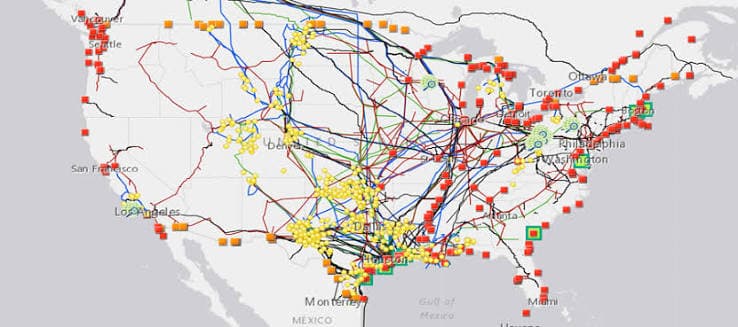
Chemical production depends upon extensive industrial infrastructure extending far beyond individual manufacturing plants.
Key infrastructure considerations include:
Deep-water ports.
Pipeline networks.
Reliable electricity.
Natural gas distribution.
Rail and road connectivity.
Industrial utility services.
Regions possessing integrated industrial clusters often achieve significant efficiency advantages through shared infrastructure and established supply chains.
Regulatory Stability Influences Long-Term Returns
Large-scale chemical investments frequently operate for several decades.
Consequently, investors place considerable importance on predictable regulatory environments.
Important considerations include:
Environmental permitting.
Tax policy.
Industrial regulation.
Trade policy.
Investment protection.
Legal certainty.
Stable regulatory frameworks reduce uncertainty while supporting long-term capital planning.
Political Stability Has Become More Important
The events of 2026 demonstrated that geopolitical risk now forms an increasingly important component of investment analysis.
Supply disruptions, shipping interruptions and regional conflicts highlighted how political developments can influence manufacturing competitiveness even when production facilities themselves remain unaffected.
Investors now increasingly evaluate:
Supply chain resilience.
Maritime security.
Export reliability.
Regional diplomatic stability.
Logistics continuity.
These considerations have become significantly more influential than they were only a few years ago.
The 2026 Crisis Changed How Investors Evaluate Location Risk
The Hormuz disruption reinforced an important lesson for chemical investors: competitive manufacturing requires more than low-cost feedstock.
Logistics resilience and geopolitical stability have become increasingly important components of investment decision-making.
Rather than focusing solely on production economics, investors now evaluate whether products can reliably reach international customers under changing geopolitical conditions.
As a result, location assessments increasingly incorporate:
Maritime trade route resilience.
Alternative export corridors.
Supply chain redundancy.
Regional security conditions.
Infrastructure flexibility.
The result is a broader definition of competitiveness than existed before the crisis.
No Single Country Leads Every Category
One of the most important conclusions from modern investment frameworks is that no country dominates every investment criterion.
Instead, different regions possess different structural advantages.
United States
Strengths include:
Abundant ethane feedstock.
Mature capital markets.
Advanced petrochemical infrastructure.
Strong research and innovation ecosystem.
Middle East
Strengths include:
Competitive natural gas feedstock.
Large integrated petrochemical complexes.
Export-oriented production capacity.
Current investment decisions, however, increasingly incorporate logistics resilience alongside these traditional advantages.
China
Strengths include:
Largest domestic chemical market.
Extensive downstream manufacturing base.
Integrated industrial supply chains.
Strong production scale.
India
Strengths include:
Rapid demand growth.
Expanding manufacturing sector.
Government support for industrial investment.
Growing domestic consumption.
Europe
European producers continue offering:
Advanced specialty chemical capabilities.
Strong research and development.
Highly skilled workforce.
World-class engineering expertise.
At the same time, investors continue weighing these advantages against higher energy costs and regulatory complexity.
Investment Decisions Balance Multiple Variables
Modern chemical investment increasingly resembles portfolio optimisation rather than selecting a single "best" location.
Companies balance factors including:
Feedstock cost.
Market access.
Infrastructure quality.
Political stability.
Regulatory certainty.
Logistics resilience.
Skilled workforce availability.
Sustainability requirements.
The optimal investment location depends upon product portfolio, target customers and long-term corporate strategy.
Procurement Teams Can Learn from Investment Trends
Investment flows often provide an early indication of future production capacity.
Procurement professionals should monitor where major producers continue allocating capital because today's investment decisions frequently determine tomorrow's supplier landscape.
Useful indicators include:
New petrochemical capacity announcements.
Integrated chemical complex developments.
Infrastructure expansion projects.
Government industrial investment programmes.
Cross-border joint ventures.
Feedstock infrastructure investments.
Understanding these trends enables procurement teams to anticipate future sourcing opportunities before new production enters the market.
Looking Ahead to H2 2026
The chemical industry's investment landscape is becoming increasingly multidimensional. While feedstock economics remain fundamental, they no longer determine competitiveness in isolation. Market access, infrastructure quality, regulatory stability, geopolitical resilience and logistics reliability now play equally important roles in evaluating long-term investment opportunities.
The experience of 2026 has reinforced that competitive production requires not only efficient manufacturing but also dependable access to global markets. Locations combining cost-effective feedstocks with diversified export routes, modern infrastructure and stable operating environments are increasingly attracting long-term capital investment.
For procurement professionals, these investment patterns offer valuable strategic intelligence. The regions attracting today's chemical investments are likely to become tomorrow's production leaders. By monitoring where global producers continue expanding capacity—and understanding the structural reasons behind those decisions—buyers can better anticipate future supply dynamics, identify emerging sourcing opportunities and build more resilient procurement strategies for the years ahead.
Ready to source industrial and specialty chemicals from verified global suppliers? Explore competitive offers on our platform today.
High Density Polyethylene (HDPE) CAS: 9002-88-4