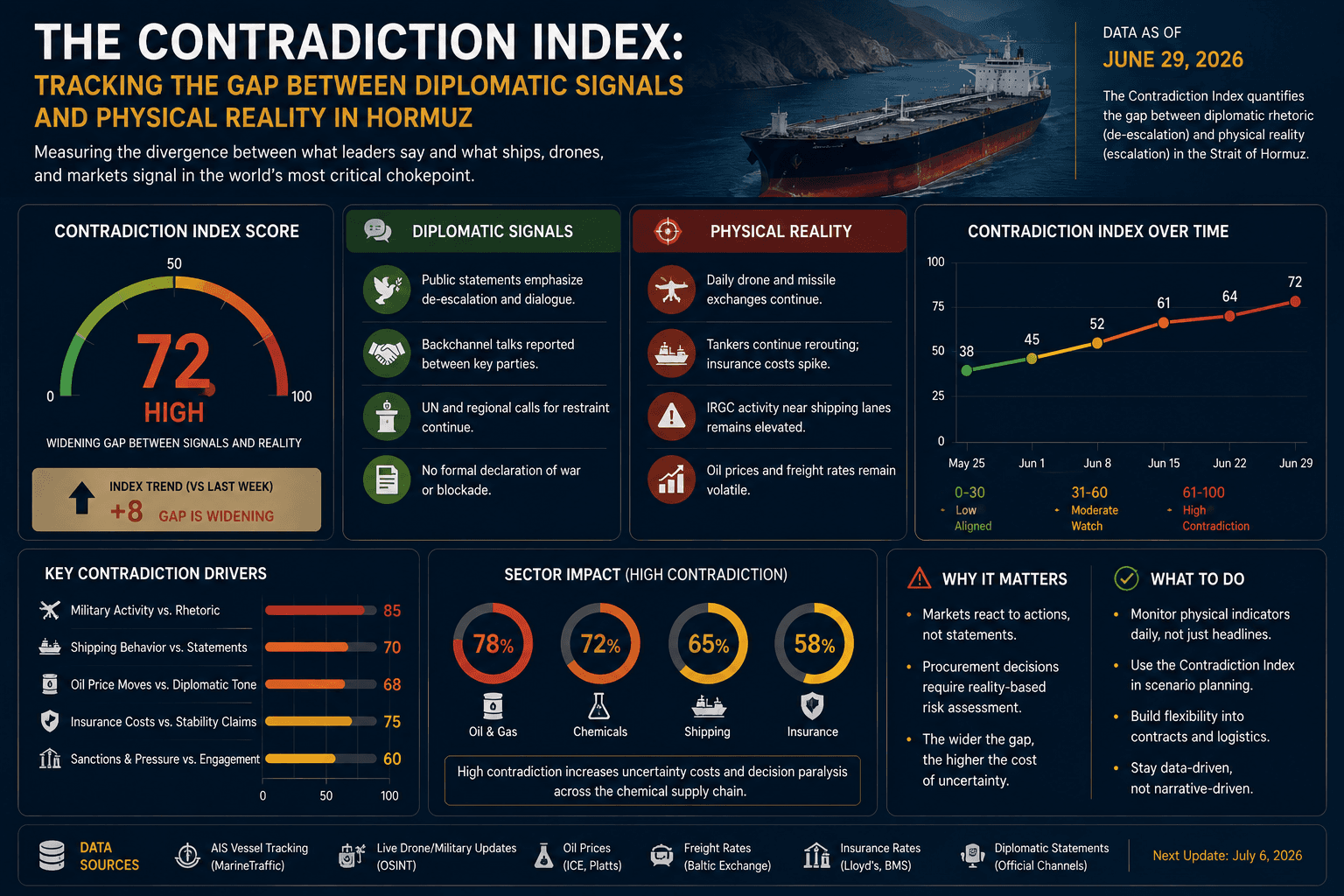
Global chemical buyers entered July with a major uncertainty: political statements around Iran negotiations do not match each other. While one side suggests diplomatic discussions are moving forward, the other side denies any upcoming negotiations.
For chemical procurement teams, the important issue is not which statement appears stronger. The key question is whether physical supply movement has changed. The latest Strait of Hormuz shipping activity remains the most practical indicator, with vessel movement far below normal levels despite diplomatic claims.
Chemical traders, importers and manufacturers need to separate political messaging from operational reality. Procurement decisions should follow measurable supply chain signals, not assumptions based only on public announcements.
Why Diplomatic Contradictions Create Chemical Market Uncertainty
Diplomatic negotiations often move through private channels, making public statements difficult to interpret. For businesses dependent on international supply routes, conflicting messages can create hesitation across the supply chain.
A chemical buyer may face several immediate questions:
Should new purchase orders move forward or wait for clearer information?
Should companies increase inventory levels to protect production?
Should buyers switch suppliers or continue existing sourcing plans?
How should logistics teams prepare for possible route disruption?
These decisions require reliable information. Political statements can influence market sentiment, but shipping activity, supplier communication and cargo movement provide a stronger operational picture.
Strait of Hormuz Shipping Data Remains the Key Indicator
The Strait of Hormuz remains one of the most closely monitored trade routes for global commodities and chemicals. The current shipping picture shows a significant difference between normal vessel movement and recent activity.
According to available tracking information, only a small number of vessels are currently transiting the route compared with typical daily levels. This gap matters because chemical supply chains depend on consistent maritime movement.
For procurement teams, reduced vessel activity can create pressure through:
Longer delivery timelines as available shipping capacity becomes limited.
Higher freight costs if carriers adjust operations.
Greater uncertainty for imported raw materials.
Increased demand for alternative suppliers.
The practical message is clear: physical trade flow matters more than diplomatic expectations.
Chemical Procurement Risks When Market Signals Conflict
When political information changes quickly, chemical buyers face a difficult planning environment. The biggest mistake is creating supply assumptions from a single source.
A supplier may report improving conditions while shipping activity remains restricted. Alternatively, political tensions may appear severe while logistics continue operating normally.
Procurement managers should review multiple factors before making decisions:
Confirm vessel movement through reliable shipping information.
Maintain direct communication with suppliers and freight partners.
Monitor lead times rather than only market headlines.
Review inventory coverage for critical materials.
Chemical companies that depend on uninterrupted production need practical risk controls, especially when sourcing from regions connected to sensitive shipping routes.
How Chemical Buyers Should Respond in July 2026
The current environment does not require panic buying, but it does require better preparation. Buyers should focus on maintaining flexibility while avoiding unnecessary exposure.
Recommended actions include:
Review supplier alternatives. Companies should know which qualified suppliers can provide replacement volumes if delays increase.
Check inventory positions. Critical chemicals with limited alternatives may require additional safety stock.
Monitor logistics updates daily. Shipping conditions can change faster than contract cycles.
Avoid making long-term decisions based only on political announcements. Procurement strategies should rely on confirmed commercial developments.
The objective is not to predict every diplomatic outcome. The objective is to protect business continuity under uncertain conditions.

Supply Chain Lessons From the Iran Negotiation Dispute
The current situation highlights a broader lesson for international chemical trading. Modern supply chains operate through a combination of physical infrastructure, commercial relationships and geopolitical stability.
A chemical market can react before an actual shortage appears. Traders may adjust offers, buyers may increase inquiries and logistics providers may change pricing based on perceived risk.
Procurement teams should understand the difference between:
Market sentiment, which reflects expectations and concerns.
Supply reality, which reflects actual production, transport and availability.
Long-term risk, which requires strategic planning beyond short-term headlines.
Strong procurement systems track all three.
Building a More Reliable Chemical Sourcing Strategy
Chemical buyers cannot remove geopolitical risk, but they can reduce exposure. The strongest strategies focus on resilience rather than prediction.
Companies can improve sourcing stability by:
Working with multiple approved suppliers across different regions.
Negotiating flexible delivery terms where possible.
Keeping updated records of alternative production sources.
Developing internal response plans for transport disruption.
A resilient supply chain gives procurement teams more options when uncertainty affects global trade.
What Chemical Buyers Should Monitor Next
The coming weeks will likely depend on whether shipping activity improves, remains restricted or declines further. Political discussions may continue, but procurement teams should watch measurable commercial indicators.
Key signals include:
Vessel traffic through the Strait of Hormuz.
Freight availability and insurance conditions.
Supplier delivery commitments.
Changes in chemical pricing caused by supply concerns.
These indicators provide a clearer foundation for purchasing decisions than conflicting public statements.
The Bottom Line for Procurement Teams
The current Iran negotiation uncertainty delivers one important lesson for chemical buyers: do not build supply chain plans around unverified political expectations.
Diplomatic statements can change quickly, but physical logistics data shows what is happening on the ground. For July procurement decisions, companies should focus on vessel movement, supplier reliability and inventory protection.
Chemical buyers that combine verified information with flexible sourcing strategies will be better prepared for future disruptions.
Ready to source Acrylic Acid from verified global suppliers? Explore competitive offers on our platform today.
Acrylic Acid (Glacial) - China CAS: 79-10-7